Hispaniola (/ˌhɪspənˈjoʊlə/,[3][4][5] also UK: /-pænˈ-/;[6] Spanish: La Española; Latin and French: Hispaniola; Haitian Creole: Ispayola; Taino: Ayiti or Quisqueya)[7][8] is an island in the Caribbean that is part of the Greater Antilles. Hispaniola is the most populous island in the West Indies, and the region's second largest in area, after the island of Cuba.
The 76,192-square-kilometre (29,418 sq mi) island is divided into two separate nations: the Spanish-speaking Dominican Republic (48,445 km2, 18,705 sq mi) to the east and the French / Haitian Creole-speaking Haiti (27,750 km2, 10,710 sq mi) to the west. The only other divided island in the Caribbean is Saint Martin, which is shared between France (Saint Martin) and the Netherlands (Sint Maarten).
Hispaniola, Spanish La Española, second largest island of the West Indies, lying within the Greater Antilles, in the Caribbean Sea.
It is divided politically into the Republic of Haiti (west) and the Dominican Republic (east). The island’s area is 29,418 square miles (76,192 square km); its greatest length is nearly 400 miles (650 km), and its width is 150 miles (241 km).
Christopher Columbus landed on the island in 1492 and named it La Isla Española (Hispaniola in its Anglicized form). During Spanish colonial times, the island’s position on the northern flank of the Caribbean Sea provided an excellent location for control of Spanish expansion to Cuba, Mexico, Panama, and South America.
During the colonial period the island was commonly called Santo Domingo, named for the capital city (now the national capital of the Dominican Republic), and that name has still been used sometimes.
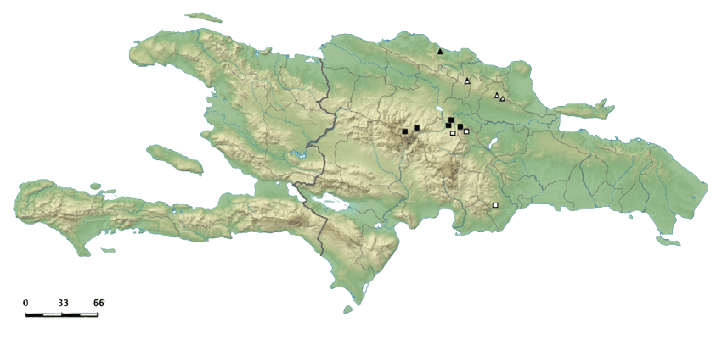
The island of Hispaniola is divided into 2 countries Domnican Republic and Haiti.2/3rd of Haiti belongs to the territory pf dominican republic and 1/3 to haiti.During the colonial period the island was commonly called Santo Domingo, named for the capital city (now the national capital of the Dominican Republic), and that name has still been used sometimes. The entire island has also been referred to as Haiti, supposed by some to be the precolonial name used by aboriginal
Hispaniola is the site of one of the first European settlements in the Americas, La Navidad (1492–1493), as well as the first proper town, La Isabela (1493–1500), and the first permanent settlement—that is, the current capital of the Dominican Republic, Santo Domingo (est. 1498).
The 76,192-square-kilometre (29,418 sq mi) island is divided into two separate nations: the Spanish-speaking Dominican Republic (48,445 km2, 18,705 sq mi) to the east and the French / Haitian Creole-speaking Haiti (27,750 km2, 10,710 sq mi) to the west. The only other divided island in the Caribbean is Saint Martin, which is shared between France (Saint Martin) and the Netherlands (Sint Maarten).
Hispaniola is the site of one of the first European settlements in the Americas, La Navidad (1492–1493), as well as the first proper town, La Isabela (1493–1500), and the first permanent settlement—that is, the current capital of the Dominican Republic, Santo Domingo (est. 1498).